When the market softens, selling gets harder. Buyers become more cautious, properties take longer to sell, and the prices achieved a year earlier become increasingly difficult to match.
For homeowners considering selling, this can understandably create uncertainty. Should you sell now? Should you wait for the market to improve? And what happens if your property doesn't achieve the price you had hoped for?
While these are all reasonable questions, there's another perspective worth considering.
If you're selling and buying in the same market, there's an upside
One of the most important things to remember is that if you're selling one property to purchase another, you're generally operating in the same market.
Yes, you may achieve less for your current home than you might have during a stronger market. But equally, the property you're looking to purchase may now be more affordable, with less competition from other buyers and greater opportunities to negotiate.
A worked example. If you're selling a $1.5 million home and purchasing a $2 million property, a 10% reduction in both prices means receiving $150,000 less on your sale but potentially paying $200,000 less on your purchase.
In that scenario, you're actually $50,000 better off on the price difference.
Of course, markets vary between locations and property types, and transaction costs need to be considered. But the principle remains.
This is particularly relevant for homeowners looking to upgrade, downsize or relocate.
If only we had a crystal ball
We would all love to be able to predict the property market perfectly. Imagine being able to sell at the absolute peak, then purchase your next property at the very bottom. Unfortunately, nobody has that crystal ball.
Trying to time the market can be just as risky as selling during a downturn. Waiting for conditions to improve might mean holding onto a property longer than planned, continuing to incur mortgage and maintenance costs, or missing an opportunity to purchase a home that perfectly suits your needs.
And when the market does eventually improve, the property you're hoping to buy may become more expensive too.
Rather than trying to predict exactly when the market will turn, it can be far more productive to focus on your personal circumstances, your longer-term objectives and the opportunities available today.
In a tough market, presentation matters more than ever
When buyers have more choice and greater negotiating power, presenting your property at its absolute best becomes increasingly important.
In a strong market, buyers may be willing to overlook imperfections because they're worried about missing out. In a slower market, they can afford to be more selective.
This means first impressions, emotional connection and the overall presentation of your home can play an even more important role in attracting interest.
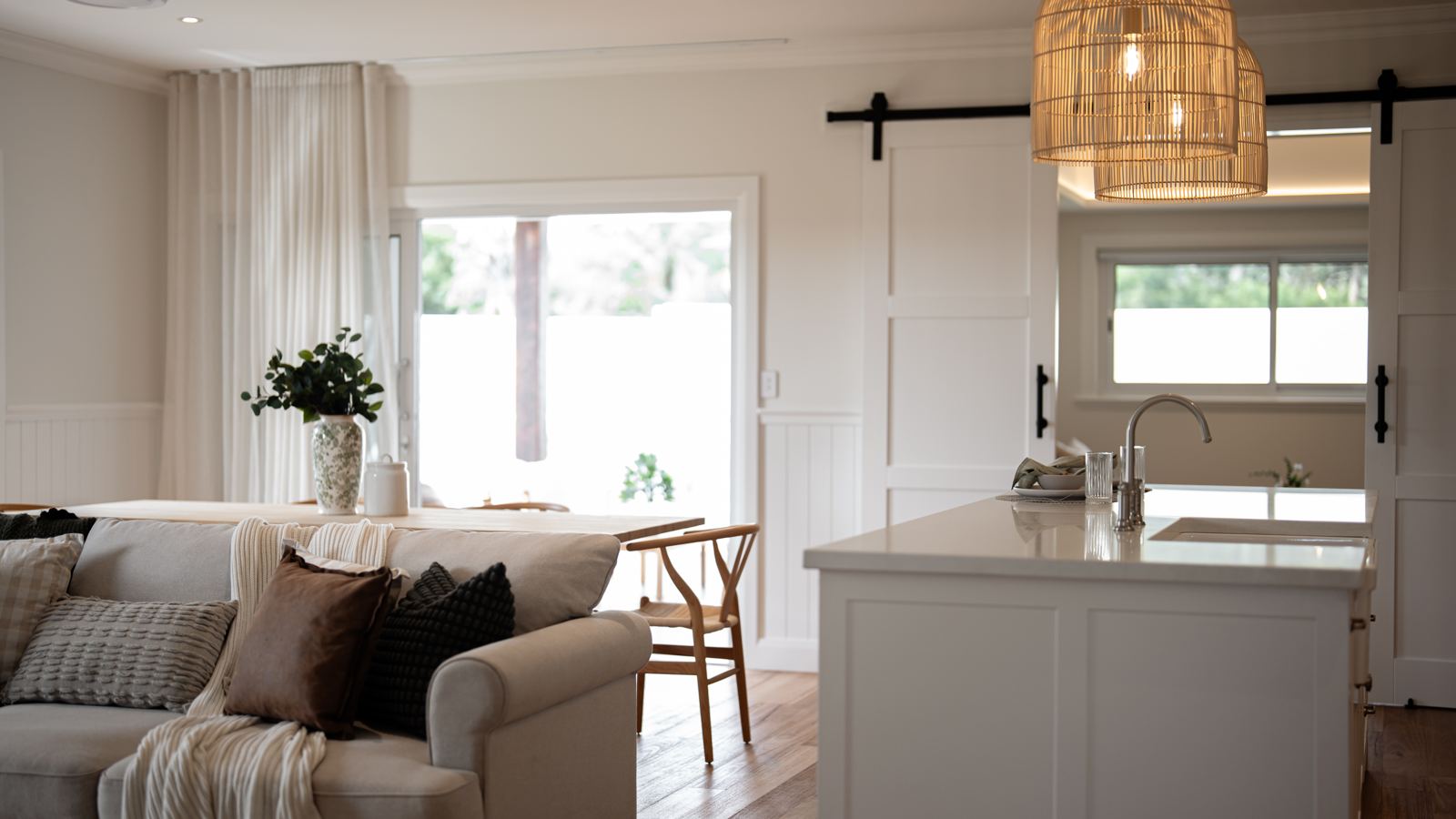
Professional property styling isn't about disguising a property's shortcomings. It's about highlighting its strengths, demonstrating how spaces can be used and helping potential buyers imagine themselves living there.
A beautifully presented home can stand out against competing listings, create stronger marketing photography and give buyers a compelling reason to inspect.
While styling cannot guarantee a particular sale price or timeframe, it can help ensure your property is competing at its best. If you're weighing up where to spend, our guide to preparing your home for sale sets out what we'd prioritise, and what we'd leave alone.
Work closely with your agent and focus on what you can control
In a changing market, having confidence in your chosen real estate agent is essential.
A good agent understands local buyer behaviour, knows how to position your property against the competition and can provide realistic advice about pricing and marketing. Listen to their feedback, understand what buyers are saying and be prepared to adjust your approach when necessary.
Equally important is ensuring that your property is ready to impress from the moment it goes to market.
- Declutter, so rooms read larger and photographs read more clearly.
- Attend to minor maintenance before a buyer's inspector finds it.
- Refresh tired spaces: paint, light and floors do most of the work.
- Invest in thoughtful presentation of the rooms where first impressions are formed.
The objective isn't to spend unnecessarily. It's to make sensible, targeted decisions that give your property the best opportunity to attract buyers.
The right time to sell is about more than the market
Property decisions are rarely driven by market conditions alone. Families grow, children move out, careers change and new opportunities arise. Sometimes the right decision to move is simply about getting on with the next chapter of life.
A softer market may require more patience, realistic expectations and a carefully considered selling strategy. But it can also create opportunities that might not exist when competition is fierce.
Our advice is simple: choose an agent you trust, present your home in the best possible way and look at the bigger picture, particularly if you're planning to buy again.
Because sometimes, the opportunity isn't in waiting for the perfect market. It's in making the most of the market you're in.